
The Most Common Myths About Lie Detectors That People Still Believe In
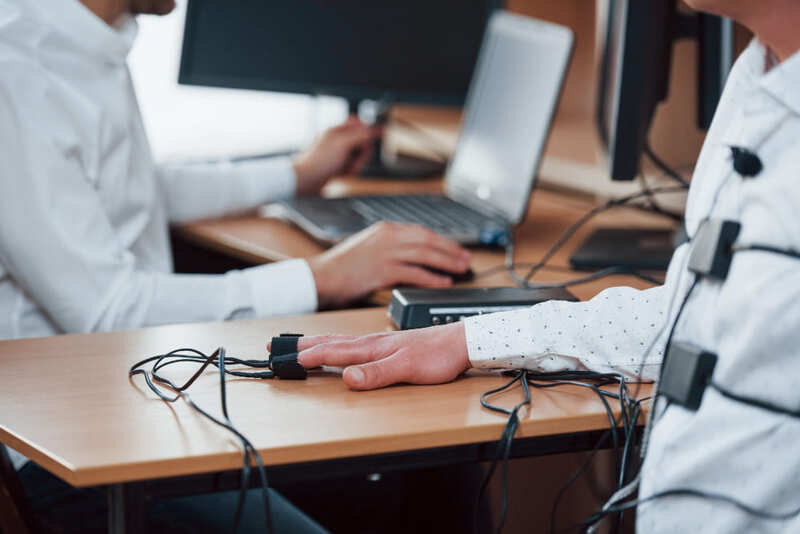
Lie detectors continue to attract public attention because they seem to offer something rare: a direct path to the truth. In films, media reports, and private disputes, the polygraph is often presented as a machine that can expose deception with almost mechanical certainty. That image is powerful, but it is also misleading. In reality, the polygraph is a tool with a narrow function, specific limits, and a high dependence on context.
Public misunderstanding grows because many people confuse physiological response with deception itself. The same habit appears in other areas where people turn complex signals into simple conclusions, whether in reputation judgments, hiring decisions, or even fast-moving digital behavior such as online cricket betting, where visible reaction does not always equal clear intent. A lie detector does not read thoughts, uncover motives directly, or prove guilt in a final sense. It records physical responses and relies on interpretation. That gap between public belief and practical reality is where most myths begin.
Myth 1: A Lie Detector Detects Lies Directly
This is the most widespread myth and also the most important one to correct. A polygraph does not detect lies in a direct way. It records physiological data such as breathing changes, pulse patterns, blood pressure variation, and skin conductivity. These reactions may increase when a person feels stress or internal conflict, but that does not mean the machine has identified a lie itself.
A person can react strongly for many reasons: fear, shame, anger, anxiety, confusion, or the memory of a stressful event. A truthful person may react intensely because they are afraid of not being believed. A deceptive person may show less visible response than expected. The device records change, not moral truth.
This myth survives because the phrase “lie detector” sounds more certain than “physiological response measurement tool interpreted by an examiner.” But the second description is closer to reality.
Myth 2: The Result Is Always Accurate
Another common belief is that the polygraph gives near-perfect results. This idea is reinforced by popular culture, where the outcome is often presented as final and unquestionable. In practice, the result is never absolute.
Polygraph outcomes can be influenced by many factors:
- the quality of question design
- the skill of the examiner
- the subject’s psychological state
- health condition or medication
- fatigue or stress unrelated to deception
- misunderstanding of the question
This means accuracy is not fixed. It depends on the method and context. Some results are clearer than others, and some remain inconclusive. False positives and false negatives are both possible. A truthful person may appear deceptive under certain conditions, and a deceptive person may not trigger a clear enough pattern for confident interpretation.
The more disciplined the testing procedure, the more useful the result may be. But “useful” is not the same as “perfect.”
Myth 3: The Machine Cannot Be Wrong, Only the Person Can
Many people assume that if a polygraph indicates deception, the subject must be lying. This belief treats the machine as objective and the human being as the only uncertain element. That is too simple.
Polygraph testing involves interpretation. The device records data, but a specialist must decide what the pattern means in the context of the examination. If the questions are poorly designed, if the subject misunderstood a term, or if the examiner framed the comparison badly, the result may be distorted.
This does not mean the process is worthless. It means the process is human-guided and therefore not immune to error. A polygraph examination is not like measuring height or weight. It involves psychological and procedural judgment. Treating the result as automatic truth is one of the biggest misconceptions people still carry.
Myth 4: Nervous People Will Always Fail
This myth is common among people who fear the test. They assume that being anxious is enough to produce a deceptive result. The logic sounds plausible because the polygraph measures physiological arousal. But the test is not designed around the simple idea that “nervous equals lying.”
A trained examiner does not look only for general nervousness. The task is to compare reactions across different types of questions. The relevant issue is whether responses to key questions differ in a meaningful way from responses to neutral or control questions. A person may be anxious throughout the test and still not show the pattern associated with deception.
That said, extreme anxiety can complicate interpretation. So the myth is partly based on a real concern, but it overstates the certainty of failure. Nervousness alone is not the same thing as deception in the testing logic.
Myth 5: Calm People Can Always Beat the Test
The opposite myth is that if a person stays calm, the polygraph becomes useless. This belief suggests that emotional control is enough to avoid detection. Again, reality is more complicated.
Some people do have stronger self-control than others. Some may prepare mentally, try to regulate breathing, or attempt other countermeasures. But “staying calm” is not a guaranteed method of defeating a well-run examination. Polygraph testing does not depend on one emotional signal alone. It looks at patterns across multiple channels and multiple question types.
At the same time, it is also false to claim that countermeasures never matter. They may complicate interpretation in some cases. The more realistic conclusion is that the test is neither impossible to influence nor easy to defeat by simple calmness. The idea that a composed person can always outplay the process is mostly a myth built on oversimplification.
Myth 6: The Polygraph Can Answer Any Question
Many people believe a lie detector can be used in almost any conflict: relationships, family arguments, vague accusations, long-term mistrust, workplace tension, or moral disputes. This is one of the reasons the tool is so often misunderstood.
A polygraph works best when the issue is narrow and factual. It is more suitable for questions like whether a person took a specific item, disclosed information, or was present at a defined event. It is much less useful for broad questions such as whether someone loves their partner, whether a person is generally loyal, or whether someone is a good employee in a broad sense.
The tool cannot solve every conflict simply because not every conflict is built on a testable factual proposition. Many disputes are driven by interpretation, memory gaps, mixed motives, or emotional history. The polygraph is not designed to untangle all of that.
Myth 7: A “Passed” Test Proves Innocence
A person who receives a favorable result is often treated as fully cleared. This is another form of overconfidence. A non-deceptive result may support a person’s position, but it does not automatically prove innocence in the full legal or moral sense.
The test result is one piece of information. It may be useful, but it should be considered together with other evidence: documents, witness statements, timelines, digital records, access logs, and context. A favorable result can strengthen a claim, but it should not be treated as the sole foundation for judgment.
The same is true in reverse. A deceptive result does not by itself complete a case. The polygraph is strongest as an investigative support tool, not as a final verdict machine.
Myth 8: Only Guilty People Refuse the Test
People often assume that refusal means guilt. That assumption is too crude. A person may refuse for many reasons:
- distrust of the process
- fear of misinterpretation
- legal advice
- medical or psychological concerns
- discomfort with the examiner or setting
- objection to the principle of testing
Refusal may raise questions in some contexts, but it cannot be treated as proof of wrongdoing. A polygraph is not a universal obligation. The meaning of refusal depends on the surrounding facts, not on a simple rule.
This myth persists because people want the social meaning of refusal to be easy. In reality, it is not.
Myth 9: The Examiner Does Not Matter
Some people think the machine does all the work, so the examiner is secondary. In fact, the examiner matters a great deal. Question formulation, pre-test interview quality, pacing, clarity, and interpretation all influence the result.
A weak examiner can reduce the value of the procedure even if the equipment is fine. A strong examiner can improve clarity by making sure the questions are precise, relevant, and understandable. The process is therefore not only about hardware. It is about a professional method.
Ignoring the role of the examiner leads people to underestimate how much the human factor shapes the outcome.
Conclusion
The most common myths about lie detectors survive because the public wants certainty, while the real procedure offers something more limited and more conditional. A polygraph does not detect lies directly, does not guarantee perfect accuracy, does not answer every kind of question, and does not replace evidence. It records physiological reactions and helps specialists evaluate them in context.
That does not make the tool useless. It makes it narrower than people often imagine. The polygraph can be helpful in defined factual disputes, internal investigations, and structured inquiries where it supports other information. It becomes misleading when treated as a machine of absolute truth. The closer expectations stay to what the method can actually do, the more responsibly it can be used.

Pranab Bhandari is an Editor of the Financial Blog “Financebuzz”. Apart from writing informative financial articles for his blog, he is a regular contributor to many national and international publications namely Tweak Your Biz, Growth Rocks ETC.