
What Are Forex Spreads? A Practical Guide to Trading Costs
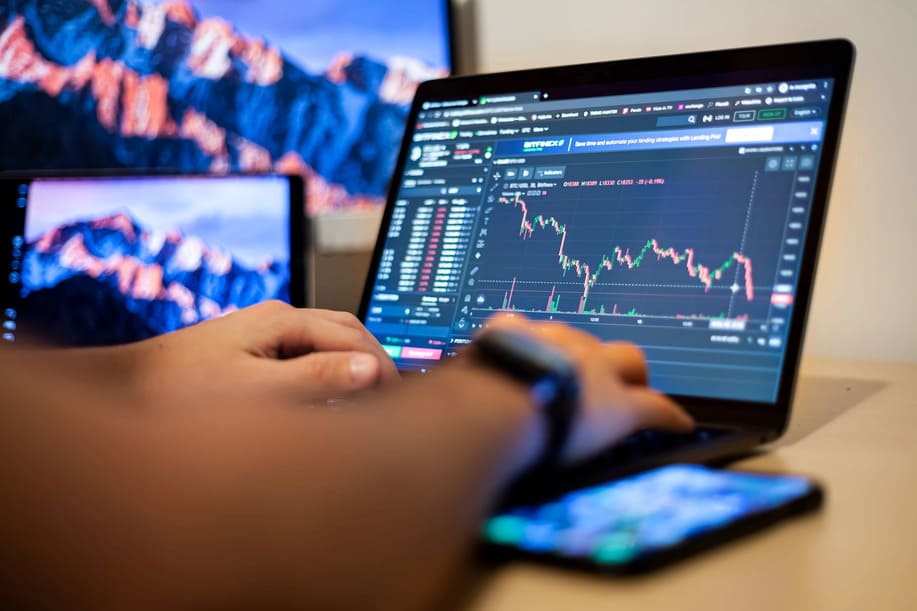
Forex trading can look deceptively simple. A trader buys one currency, sells another, and hopes the exchange rate moves in the right direction. But even before the market moves, there is usually a cost built into every trade: the spread.
Understanding spreads matters because a small difference in transaction cost can add up quickly, particularly for active traders. Anyone researching brokers can use resources such as IamForexTrader compare forex brokers to examine trading conditions side by side, but it is equally important to understand what those numbers actually mean.
So, what are forex spreads, why do they change, and when should traders pay the most attention to them?
What Is a Forex Spread?
The forex spread is the difference between the bid price and the ask price of a currency pair.
The bid is the price at which a broker or market is prepared to buy the base currency from the trader. The ask is the price at which the trader can buy it.
Imagine EUR/USD is quoted as:
- Bid: 1.0840
- Ask: 1.0842
The difference is 0.0002, or 2 pips.
That two-pip gap represents an immediate trading cost. If a position were opened and closed instantly, with the market price otherwise unchanged, the trader would generally lose approximately the value of the spread.
“A profitable trade does not only have to move in the right direction—it first has to overcome the cost of entering the market.”
This is why spreads deserve more attention than they sometimes receive.
How Spreads Translate Into Money
A spread expressed in pips does not tell the entire story. Its actual monetary cost depends on the size of the position.
Consider a simplified example:
Position Size Hypothetical Spread Approximate Pip Value* Approximate Spread Cost
| 10,000 units 1pip | $1 | $1 |
| 50,000 units 1pip | $5 | $5 |
| 100,000 units 1pip | $10 | $10 |
| 100,000 units 2pips | $10 | $20 |
*Figures are simplified examples for a USD-denominated account and can vary depending on the currency pair and exchange rate.
Calculating forex spreads and trading costs
A difference of one pip may appear insignificant. For a trader opening dozens of positions each month, however, repeated transaction costs can become meaningful.
This is one reason active traders tend to pay particularly close attention to spreads, commissions, and execution quality.
Fixed vs. Variable Forex Spreads
Forex brokers generally offer either fixed or variable spreads, although account structures vary.
Fixed Spreads
A fixed spread is designed to remain relatively stable under normal trading conditions.
Its main advantage is predictability. A trader has a clearer idea of transaction costs before placing a trade.
However, fixed spreads may be wider than the lowest variable spreads available during highly liquid market conditions. Some providers may also apply different rules during unusual volatility.
Variable Spreads
Variable spreads change according to market conditions.
When liquidity is high and trading activity is strong, they can become very tight. During periods of low liquidity or sudden volatility, however, they may widen significantly.
Neither structure is automatically better. The appropriate choice depends on trading frequency, strategy, preferred instruments, and the times at which the trader usually enters the market.
Why Do Forex Spreads Change?
Forex trader monitoring volatile financial markets
One of the most important things for beginners to understand is that the spread displayed on a broker’s website may not be the spread available every minute of every trading day.
Several factors can affect it.
Liquidity. Major currency pairs with large trading volumes generally have tighter spreads than less frequently traded currencies.
Trading session. Liquidity tends to improve when major financial centers are active, especially when sessions overlap.
Economic news. Inflation reports, employment data, central bank decisions, and other major announcements can lead to sudden market movements and wider spreads.
Market uncertainty. Elections, geopolitical developments, unexpected policy decisions, and financial shocks can reduce available liquidity.
Time of day. Spreads may widen around the daily rollover period or when major markets are closed.
This means the lowest advertised spread should not be treated as a guarantee of the typical cost of trading.
The Lowest Spread Is Not Always the Cheapest Account
Choosing a forex account purely because it advertises a spread from 0.0 pips can be misleading.
A zero-spread or raw-spread account may charge a separate commission for opening and closing positions. Other accounts may include most of the broker’s compensation inside the spread.
For example, consider two hypothetical accounts:
Account A
- Spread: 1.0 pip
- Commission: $0
Account B
- Spread: 0.2 pip
- Round-turn commission: $7 per standard lot
At first glance, Account B appears much cheaper. Once the commission is included, the difference may be considerably smaller.
The right question is therefore not simply, “Which broker has the lowest spread?”
A better question is:
“What is the total cost of opening, maintaining, and closing my typical trade?”
Costs Beyond the Spread
Forex traders may encounter several other expenses.
These can include:
- trading commissions;
- overnight financing or swap charges;
- currency-conversion fees;
- deposit or withdrawal charges;
- inactivity fees;
- slippage during fast markets.
The relevance of each cost depends on the trading strategy.
A day trader who rarely holds a position overnight may care much more about spreads and commissions than swaps. A position trader holding trades for several weeks may find overnight financing just as important as the entry spread.
Why Execution Quality Matters Too
An advertised spread tells traders the difference between quoted bid and ask prices. It does not necessarily tell them the exact price at which every order will be filled.
During volatile markets, the requested price and execution price may differ. This is known as slippage.
A broker offering very tight quoted spreads but consistently poor execution may ultimately be more expensive than one with marginally wider spreads and more reliable fills.
When evaluating trading conditions, useful factors include:
- typical rather than minimum spreads;
- commissions;
- execution model;
- order execution speed;
- positive and negative slippage;
- available order types;
- trading-platform stability.
Looking at costs as a whole provides a more realistic picture than focusing on a single marketing figure.
When Are Low Spreads Most Important?
Spread sensitivity depends heavily on trading style.
A long-term trader targeting a movement of several hundred pips is unlikely to view a one-pip difference in entry cost in the same way as a scalper targeting only a few pips per trade.
Spreads become especially important when traders:
- make many trades each day;
- use short-term strategies;
- trade relatively small price movements;
- use automated trading systems;
- operate with larger position sizes.
The more frequently a trader enters and exits the market, the more transaction costs can influence overall results.
A Simple Checklist Before Choosing a Broker
Instead of looking only at the headline spread, traders can ask a few practical questions:
- What is the typical spread on the currency pairs I actually intend to trade?
- Is there a separate commission per lot?
- What happens to spreads during volatile periods?
- Are there overnight financing costs?
- How does execution perform during major economic announcements?
- Are spreads different across account types?
- Are the broker’s trading conditions clearly disclosed?
Even small differences deserve consideration when they are repeated hundreds of times.
The Bottom Line
Forex spreads are one of the basic costs of currency trading, but understanding them requires more than finding the smallest number advertised on a broker’s homepage.
The real trading cost is shaped by spreads, commissions, execution, financing charges, position size, and trading frequency. Variable market conditions can also mean that today’s one-pip spread becomes considerably wider during a volatile event.
For casual traders, a small difference in spreads may have limited impact. For high-frequency or short-term traders, it can materially affect long-term results.
Before opening an account, traders should therefore look beyond “spreads from 0.0 pips” and calculate what trading their own strategy is likely to cost in real-world conditions.
A few minutes spent understanding transaction costs can provide a much clearer picture of what it actually takes for a forex trade to become profitable.

Pranab Bhandari is an Editor of the Financial Blog “Financebuzz”. Apart from writing informative financial articles for his blog, he is a regular contributor to many national and international publications namely Tweak Your Biz, Growth Rocks ETC.