Design Principles That Improve Workflow, Service Quality, and Overall Business Impact
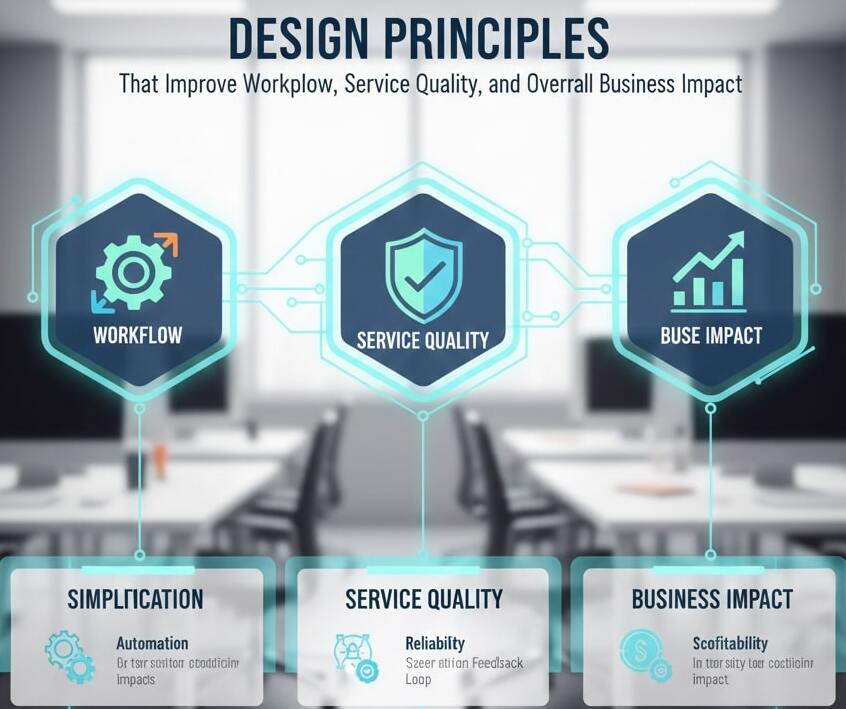
Businesses across industries face rising pressure to streamline internal processes, reduce delays, and enhance the client experience. Strategic design principles help you reach these goals by shaping how people navigate the space, how teams communicate, and how well each area supports its purpose. When the design matches operational needs, you eliminate unnecessary movement and reduce friction that slows performance. This article explains practical steps you can use to design a space that supports workflow, strengthens service quality, and improves your overall business results.
Designing for clear and consistent movement
Movement throughout a space influences how quickly employees complete tasks and how customers experience your services. If workers cross paths too often or if bottlenecks form in tight areas, delays occur and productivity declines. Clear movement lanes reduce this problem by giving each group a predictable path.
High traffic corridors should offer enough width for staff to move equipment, inventory, or supplies without stopping others. Customer-focused areas should also guide people naturally from entry to service points. Clear movement patterns reduce confusion, support better communication, and limit unnecessary steps that drain time and energy.
The design should fit your business model. A retail space needs wide product aisles and open sightlines. A restaurant needs a defined circulation route from the kitchen to the dining zones. An office layout benefits from grouping departments by workflow sequence. When movement patterns support operational logic, service improves, and delays decrease.
Supporting service tasks through purposeful zoning
Zoning organizes a space into functional sections that match the needs of your teams and customers. Each zone should support a clear purpose. When tasks overlap in one area or when different teams fight for shared space, service interruptions increase.
A strong zoning strategy separates preparation, service, and customer interaction areas. For example, a front desk area should give staff enough space to access systems, answer queries, and complete administrative tasks without background traffic noise. A product preparation or staging area should keep materials within reach to reduce wasted time. A storage zone should be planned to prevent clutter from affecting workflow.
Zoning plays a key role in enhancing safety and hygiene. For businesses with public amenities, strategic layout improvements, like the installation of durable materials in restrooms, significantly boost long-term dependability. Careful design considerations, such as using the appropriate toilet partition door width, ensure both privacy and efficient flow in shared spaces. These seemingly minor modifications not only improve customer comfort but also minimize subsequent maintenance problems.
Creating settings that support comfort and productivity
Comfort has a significant impact on both employee morale and customer experience. When people feel at ease, they interact more positively and complete tasks with fewer errors. Good lighting supports accuracy. Thoughtful temperature control improves alertness. Quality seating and work surfaces reduce fatigue during long service periods.
Visual comfort also plays a role. A clean and organized space signals professionalism and builds trust. Customers stay longer when the environment feels structured. Staff also communicate and collaborate better when they have clear visibility across work zones.
Materials matter. Floors should absorb sound in busy environments to reduce noise stress. Wall finishes should support cleaning routines. Furniture should be easily repositionable when workflow adjustments are needed. Comfort-driven design decisions strengthen the quality of each interaction, which supports stronger business outcomes.
Streamlining tasks through the strategic placement of tools and resources
Service performance improves when tools, equipment, and technology are placed within easy reach. If employees must walk across the space repeatedly for essential items, service speed declines. A strategic placement plan reviews the sequence of tasks and positions resources to support each step.
Point of sale systems should sit near main service points to reduce customer waiting times. Teams should have quick access to supplies in the exact location where they perform tasks. Equipment storage should sit close to operational zones rather than far from the action.
Technology also supports placement decisions. When digital systems sit near high-frequency work areas, updates and communication move faster. This reduces errors and strengthens consistency across teams. When the placement of tools aligns with operational flow, staff complete tasks faster and with less stress.
Balancing aesthetics with operational strength
A visually appealing space builds confidence and supports brand positioning. However, an attractive design must still match operational demands. Beautiful but fragile finishes raise maintenance costs and slow service when repairs are frequent. Heavy traffic areas need durable materials. Customer-facing areas benefit from visual clarity and simple design lines.
Color selection should support your business goals. Neutral tones create a calm and professional feel. Stronger colors help guide attention to important service zones. Texture choices also influence perception. For example, smooth materials communicate cleanliness in healthcare or hospitality settings.
A balanced approach ensures that design choices enhance the experience without compromising efficiency. When aesthetics and function work together, the business environment operates with fewer interruptions and a stronger sense of purpose.
Building adaptable spaces that support long-term efficiency
Businesses evolve. Market demands shift. Customer preferences change. Operational systems grow more complex. A strong design strategy makes room for these changes by creating adaptable spaces with flexible layouts.
Modular furniture, mobile workstations, and reconfigurable partitions let you shift your layout without major investment. This helps you respond faster to new service offerings or seasonal peaks. Shelving, signage, and storage should also adjust easily to support new operational needs.
Adaptability protects your long-term investment. It reduces the need for large-scale renovations and keeps service quality stable even when processes change. When you design a space that adapts to growth, your business stays competitive and responsive.
Strengthening reliability through structured maintenance planning
Design quality supports service only when the space stays functional. A structured maintenance routine keeps essential areas clean, safe, and operational. Businesses strengthen reliability by adopting a long-term maintenance plan that covers equipment checks, material upkeep, and safety compliance.
Maintenance planning reduces downtime and protects your budget. It also builds trust among customers who see your attention to detail in every part of the environment. Linking maintenance practices with overall design helps you sustain strong performance.
For guidance on preventive practices, resources such as proactive maintenance strategies offer insights into avoiding costly repairs and extending the lifespan of your physical assets.
Improving long-term impact through coordinated design decisions
A strong design strategy influences daily performance and long-term business value. Better workflow reduces labor waste. Higher service quality attracts stronger customer loyalty. Clear layout decisions strengthen your team’s ability to deliver consistent results. Strategic choices also reduce long-term costs by preventing inefficiencies and design-related errors.
For a system to function effectively, its core elements must operate in concert:
- Efficiency and Speed: Optimized movement patterns directly enhance the speed of task completion.
- Organization and Accountability: Strategic zoning clearly defines and organizes operational responsibilities.
- Accuracy and Well-being: A focus on comfort improves accuracy in tasks.
- Workflow Optimization: Thoughtful resource placement significantly reduces operational friction.
- Brand Perception: Strong aesthetics build and reinforce customer and brand trust.
- Future Readiness: Built-in adaptability is crucial for supporting future growth and evolution.
- Sustained Operation: Consistent maintenance protects and ensures long-term operational stability.
When businesses commit to coordinated design improvements, the environment becomes an active driver of performance instead of a background element. The result is a more efficient workflow, better service quality, and a stronger foundation for sustained business success.
Conclusion
A well-designed space strengthens workflow, supports service quality, and improves your long-term business impact. When movement paths, zoning, comfort, resource placement, and durability align with your operational goals, the environment works with your team instead of against it. Consistent design choices help you deliver stronger results each day and build a foundation for sustained growth.

Pranab Bhandari is an Editor of the Financial Blog “Financebuzz”. Apart from writing informative financial articles for his blog, he is a regular contributor to many national and international publications namely Tweak Your Biz, Growth Rocks ETC.