
Physical Gold vs Gold ETFs: Which Is Better for Investors?
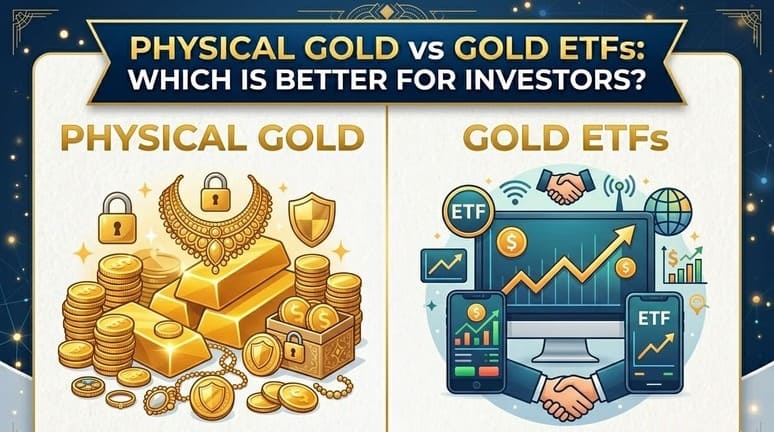
For years, the debate around physical gold vs gold ETF has quietly followed almost every investor conversation in India. Gold isn’t just another asset. It has emotional meaning. It carried cultural significance. And financial security for obvious reasons.
One person buys gold because their grandmother always believed “sona kabhi dhoka nahi deta.” Another buys it because markets feel shaky and inflation is eating away savings. Then there are younger investors who don’t want lockers, making charges, or the headache of storing jewellery safely.
That’s where the real question begins. When it comes to physical gold vs gold ETF, which one actually makes more sense for today’s investor?
The “better” option depends less on trends and more on how you think about money, security, liquidity, and trust.
Let’s unpack it properly.
Why gold still holds value?
Despite crypto trends, stock market excitement, and new-age apps promising overnight wealth, gold hasn’t lost relevance. If anything, uncertainty has made it stronger.
People still turn to gold during:
- inflation spikes
- currency instability
- geopolitical tensions
- stock market corrections
- long-term wealth preservation goals
There’s comfort in gold that numbers alone can’t explain. You can hold it. See it. Pass it on. That emotional reassurance is part of the reason the conversation around different gold investment options keeps growing. But not all gold investments work the same way.
What’s physical gold?
Physical gold is exactly what it sounds like. Tangible gold you can buy, store, gift, or sell later.
Usually, investors choose:
- jewellery
- gold coins and bars
- biscuits
- sovereign gold products
Among these, investment-focused buyers typically prefer coins and bars because purity and pricing are easier to track compared to jewellery. And yes, there’s still something deeply satisfying about physically holding gold in your hand. Even investors who actively trade stocks sometimes admit this. It feels real.
Why People prefer physical gold?
The biggest strength of physical gold is ownership. No app. No demat account. No dependency on internet access or fund houses. It’s completely yours.
For many Indian families, physical gold also carries generational value. It becomes part of weddings, inheritances, family security, and emergency backup planning.
Some major advantages include:
1. Tangible Asset
You physically own it. That psychological comfort cannot be replicated digitally.
2. No Market Dependency
Gold prices fluctuate, yes. But you’re not exposed to stock market operational risks or fund-related concerns.
3. Useful Beyond Investment
Physical gold can be pledged for loans, gifted, or transferred within families easily.
4. Long-Term Wealth Preservation
Historically, gold has held value remarkably well over long periods, especially during uncertain economic phases.
But physical gold has its own limitations
Now comes the part many advertisements skip. Physical gold isn’t perfect. Storage becomes a concern once your investment grows. Lockers cost money. Home storage creates risk. Insurance adds another layer. Then there’s purity anxiety. Anyone who has ever sold old jewellery knows the uncomfortable feeling of hearing deductions, melting charges, or valuation disputes.
That’s why trusted sourcing matters immensely when buying investment-grade gold. Many investors today prefer purchasing through reputed providers offering certified gold coins and bars in India. Because when you’re investing serious money, trust becomes part of the product itself.
What does a gold ETF really mean?
A Gold ETF lets you invest in gold digitally without holding it in tangible form. You buy units through the stock market, and those units represent gold holdings managed by the fund. Instead of storing actual gold, you’re holding a financial instrument linked to gold prices. This option has become increasingly popular among younger investors who already use trading apps and prefer convenience over physical possession.
Why do investors give more weightage to gold ETFs?
Gold ETFs remove many practical headaches associated with physical ownership. No locker fees. No theft concerns. No making charges. No purity testing drama.
You can buy or sell instantly during market hours. That flexibility is attractive, especially for urban investors building diversified portfolios.
Some of its merits are:
Easy Liquidity
Selling ETF units is usually faster than physically selling gold.
Transparency
Pricing closely follows market gold rates.
Lower Storage Burden
It doesn’t require any physical safeguarding.
Portfolio Diversification
Gold ETFs fit smoothly into broader investment planning strategies, particularly for investors already managing equities, SIPs, or bonds.
The secret aspect of gold ETFs
But here’s where things get interesting. A lot of first-time investors assume ETFs are simply “better gold.” That’s not always true. Because while ETFs offer convenience, they remove the emotional and physical aspect of ownership entirely. You cannot hold it. Gift it. Wear it. Pass it to your child physically. And surprisingly, that matters more than financial planners often acknowledge.
There are also management fees involved, though usually small. Plus, ETF investments depend on market systems functioning smoothly. During extreme financial disruptions, some investors still prefer assets they can physically access. Call it emotional logic. Call it old-school thinking. But it’s real.
Physical Gold vs Gold ETF: Which one should you choose?
The debate around physical gold vs gold ETF really comes down to what kind of investor you are. Physical gold offers tangible ownership, emotional security, and long-term family value. But it also comes with responsibilities like storage, safety, and purity checks.
Gold ETFs, meanwhile, offer convenience. They’re easier to buy and sell, highly liquid, and don’t require lockers or physical storage. They suit investors who prefer digital investing and portfolio flexibility. The only thing missing is the emotional satisfaction of actually owning gold.
That’s why many investors today don’t choose one over the other. They keep physical gold for security and legacy, while using ETFs for convenience and liquidity.
The benefits of gold investment can’t be ignored
No matter which route you choose in the physical gold vs gold ETF discussion, the core benefits of gold investment remain surprisingly consistent.
Gold still acts as:
A Hedge Against Inflation
When purchasing power weakens, gold often retains value better than cash.
A Crisis Asset
During uncertainty, investors naturally move toward safer assets. Gold benefits from that behavior repeatedly.
Portfolio Stabilizer
Gold doesn’t always move in sync with equities, which helps balance overall investment risk.
Long-Term Wealth Storage
Gold may not always generate aggressive returns quickly, but it has historically protected wealth over decades. That consistency matters, especially in times when financial trends change every few months.
Which is the best way to invest in gold?
The best way to invest in gold depends on your requirements. If you want the satisfaction of physical ownership of the asset, you should go for physical gold.
If you prioritize liquidity, convenience, transparency, and digital investing simplicity, Gold ETFs may fit better. Most balanced investors eventually create a mix. A small allocation to physical gold for security and legacy. A separate allocation to ETFs for flexibility and portfolio management.
That combination often solves the weaknesses of both.
So the question is, What role do you want gold to play in your life?
Because once you answer that, the physical gold vs gold ETF decision becomes much clearer.

Pranab Bhandari is an Editor of the Financial Blog “Financebuzz”. Apart from writing informative financial articles for his blog, he is a regular contributor to many national and international publications namely Tweak Your Biz, Growth Rocks ETC.